
I had exactly $500 to spend on a phone last week.
Naturally, my first instinct was to look at the “New Arrivals” section. The marketing posters were everywhere, promising me that the latest mid-range phone (let’s call it the “Galaxy A-Series” or the “Pixel A-Series”) was a revolution. It had a shiny new box, a 1-year warranty, and that fresh plastic smell.
But before I clicked “Buy,” I paused. I opened Excel and did some quick math.
I realized that for the same $500, I could buy a used Flagship phone from 2023 (like the Galaxy S23 Ultra or iPhone 13 Pro).
Everyone told me I was crazy to buy “old” tech. But after analyzing the specs, the build quality, and—most importantly—the depreciation, I realized the “old” phone was actually the smarter investment.
Here is why I will never buy a mid-range phone again.
The “New vs. Old” Trap
We are trained to believe that “New = Better.” Technology moves fast, right?
Not anymore. In 2025, smartphone innovation has slowed down. The processor in a 2023 Flagship is often still faster than the processor in a 2025 Mid-range phone.
When you buy a mid-range phone, you are paying for marketing. When you buy an older flagship, you are paying for engineering.
The Comparison: 2023 Flagship vs. 2025 Mid-Range
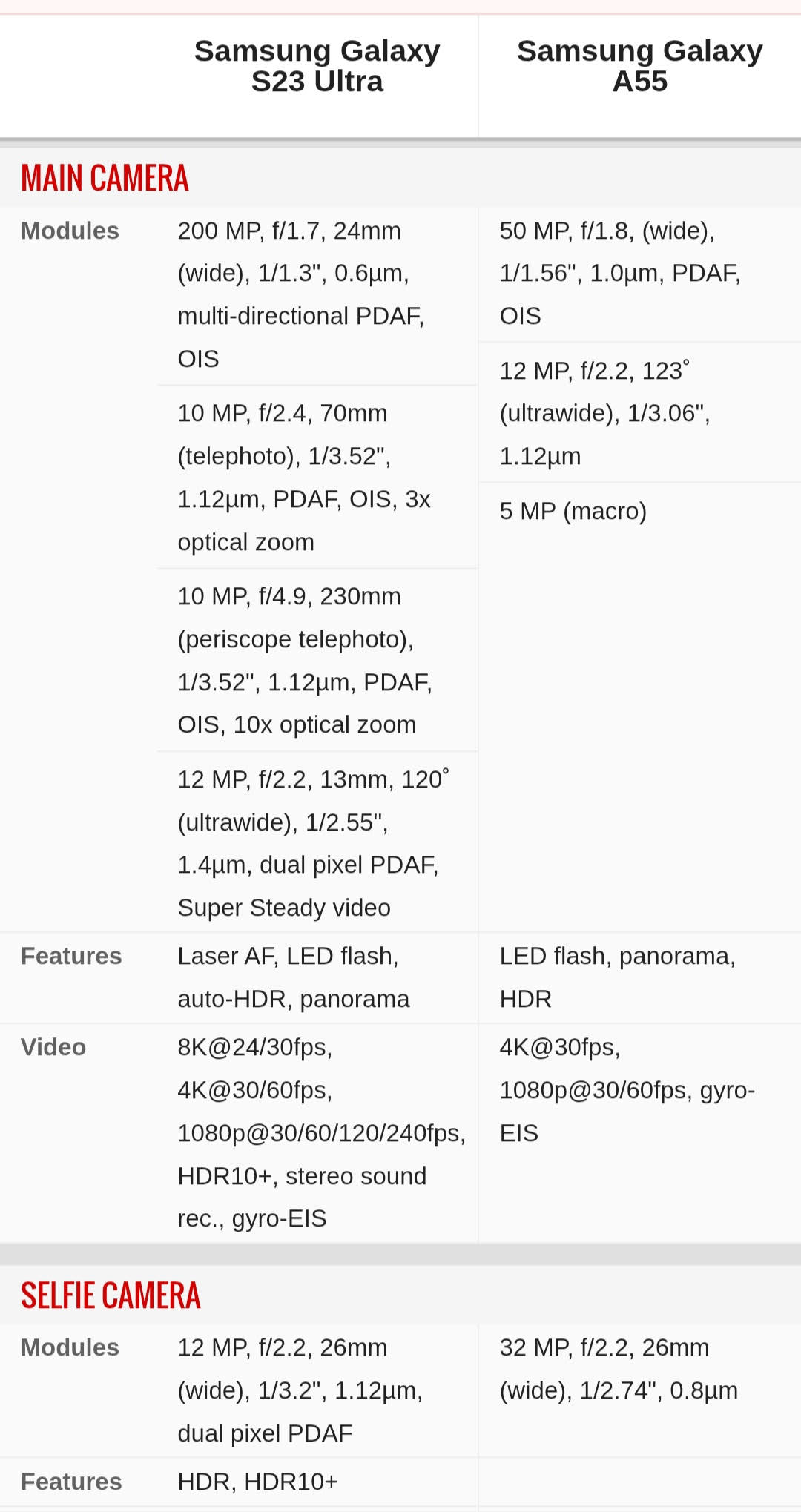
Let’s look at the actual trade-offs. I compared a standard $450 Mid-Range Phone (2025 model) against a Used Flagship (2023 model).
| Feature | New Mid-Range Phone ($450) | Used Flagship ($450) | Winner? |
| Build Quality | Plastic frame, standard glass | Titanium or Steel frame, Victus glass | Flagship |
| Camera | 50MP (Small sensor), poor zoom | 108MP+ (Huge sensor), 10x Optical Zoom | Flagship |
| Screen | OLED (Good) | Dynamic AMOLED LTPO (Best) | Flagship |
| USB Speed | USB 2.0 (Slow transfer) | USB 3.2 (Super fast) | Flagship |
| Battery | 5000mAh (New) | 5000mAh (85% Health) | Mid-Range |
The only thing the new phone wins on is battery health (because it’s brand new). But a battery replacement costs $50. The difference in camera quality and speed is worth hundreds of dollars.
The Hidden Cost: Depreciation (The Math)
This is the part nobody talks about.
If I buy that new Mid-Range phone for $450 today, how much is it worth next year?
Mid-range phones crash in value. In 12 months, it will likely be worth $200.
-
Loss: $250.
Now, look at the Used Flagship. It was $1,200 when new. It has already lost its value. I am buying it at the “bottom” of the curve for $450.
In 12 months, it will likely still be worth $350 because flagships hold value better.
-
Loss: $100.
The Verdict: The “Cheap” mid-range phone actually costs me more in lost value than the “Old” luxury phone.
Real World Usage: Why Specs Lie
On paper, the mid-range phone claims to have a “50 Megapixel Camera.”
But in my testing, megrapixels don’t matter if the processor is weak. The 2023 Flagship takes photos instantly. The mid-range phone lags for a second to process the image. That one second means I miss the shot of my dog jumping or my friend laughing.
Also, let’s talk about Haptics.
The vibration motor on a flagship feels like a precise “tick.” The vibration on a mid-range phone feels like a cheap “buzz.” It sounds minor, but you feel your phone 100 times a day. That quality matters.
Conclusion: Buy the “Old King,” Not the “New Prince”
After doing this analysis, I closed the tab for the new mid-range phone. I went to a reputable refurbished marketplace and bought the 2023 Flagship.
I didn’t just get a better phone; I made a smarter financial decision.
My Advice:
If you have a limited budget, don’t look for the “Best New Phone.” Look for the “Best Phone Used.” You will get a premium glass-and-metal device that respects your wallet, instead of a plastic toy that loses half its value the moment you open the box.