It started with a simple notification on my phone at 2:00 AM.
“Your payment of $12.99 to [Video Service] was successful.”
I stared at the screen in the dark, confused. I hadn’t opened that streaming app in three months. I had signed up to watch one specific TV show, finished it, and promised myself I would cancel before the trial ended.
I forgot.
That $12.99 mistake annoyed me. It wasn’t a lot of money, but it felt like I had just thrown it into a trash can. It made me wonder: What else am I paying for that I’m not using?
So, the next morning, I did something I hadn’t done in years. I sat down with a strong coffee, logged into my online banking, and exported my last 12 months of transactions.
What I found was shocking. I wasn’t just losing $13. I was bleeding over $100 a month on what I now call “Zombie Subscriptions”—services that are alive on my credit card but dead in my daily life.
Here is the economic breakdown of why the Subscription Economy is destroying our savings, and the specific audit system I used to fix it.
1. The “Cup of Coffee” Marketing Lie
Marketing teams are brilliant. They know that if they ask you for $120 a year, you will say “No.” That sounds expensive.
So, they break it down. They tell you: “It costs less than a cup of coffee a week!”
They frame the price as $4.99 or $9.99. These numbers are psychologically designed to feel like “loose change.” They feel invisible. You tap your card for a sandwich, and it costs more than that. So, signing up feels harmless.
But in economics, we shouldn’t look at the monthly cost. We must look at the Lifetime Cost.
When I looked at my bank statement, I saw five different charges under $15. Individually, they looked innocent. Together, they were a car payment.
2. The “Spreadsheet of Doom”: Doing the Real Math
I decided to calculate the true damage. I created a spreadsheet to track not just what I pay today, but what these subscriptions rob from my future.
Here is exactly what I found on my own account:
| Service | Monthly Cost | 1-Year Cost | 10-Year Cost |
| Video Streaming A | $15.99 | $191.88 | $1,918 |
| Video Streaming B | $12.99 | $155.88 | $1,558 |
| Music App | $10.99 | $131.88 | $1,318 |
| Cloud Storage | $9.99 | $119.88 | $1,198 |
| PDF Editor Tool | $6.00 | $72.00 | $720 |
| Gym (Unused) | $40.00 | $480.00 | $4,800 |
| TOTAL | $95.96 | $1,151.52 | $11,515 |
When I saw the final number—$11,515—I felt sick.
I was complaining about not having enough money to invest or travel. Meanwhile, I was voluntarily giving away $11,000 over the next decade for a PDF tool I used twice and a gym I hadn’t visited since January.
This is the “Opportunity Cost.” That $11,000 isn’t just spent; it is lost. If I had invested that $11,000 in the S&P 500 index fund instead, it could have grown to $20,000 or $30,000.
My “cheap” apps were costing me a fortune.
3. The Psychology of Friction (Why We Don’t Cancel)
Why do we let this happen? Tech companies rely on a psychological concept called Friction.
-
Signing Up (Low Friction): Companies make it incredibly easy to give them money. Double-click the side button on your iPhone, use FaceID, and you’re subscribed. It takes 3 seconds.
-
Canceling (High Friction): Have you ever tried to cancel a newspaper or a gym membership? You often have to call a phone number, wait on hold, or navigate through 10 sub-menus labeled “Account Settings.”
Even for simple apps, the process is hidden. They know that if it takes more than 2 minutes to cancel, most humans will say, “I’ll do it later.”
“Later” never comes. And the charges keep hitting your card, month after month.
4. The “Usage Rate” Audit: A Simple Fix
I realized I needed a strict rule to stop this bleeding. I couldn’t just “try” to save money. I needed a logical system to determine if a subscription was the Smart Price.
I call it the “Usage Cost Calculation.”
I looked at “Video Streaming Service A” ($16/month).
-
Question: How many hours did I watch last month?
-
Answer: I watched one movie (2 hours).
-
The Math: $16 divided by 2 hours = $8.00 per hour.
That is terrible value. I could have rented that movie on Amazon or Apple TV for $3.99. Subscribing was actually more expensive than paying per view.
5. My New Strategy: The “One In, One Out” Rule
To fix my digital budget, I didn’t cancel everything. I still love music and movies. But I implemented a new policy:
I am only allowed to have ONE video subscription and ONE music subscription active at a time.
Here is how it works:
-
The Rotation: If I want to watch Stranger Things, I subscribe to Netflix for one month. I binge-watch the show.
-
The Cancellation: As soon as I finish the show, I cancel Netflix.
-
The Switch: The next month, if I want to watch The Mandalorian, I subscribe to Disney+.
I treat subscriptions like a “30-Day Pass,” not a marriage. I buy the pass, use it, and leave.
The Financial Result:
-
Old Way: Paying for Netflix, Hulu, and HBO simultaneously = $45/month.
-
New Way: Paying for one at a time = $15/month.
-
Savings: $30/month = $360 per year.
Conclusion: You Are Not a User, You Are a Revenue Stream
Tech companies view your credit card as a recurring revenue stream. They count on you being busy. They count on you forgetting.
The “Smart Price” move is to be aggressive with your digital life.
Here is your homework for today:
-
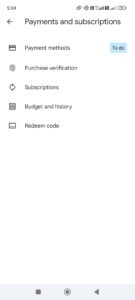
Open your Credit Card statement or your “Subscriptions” list in the App Store.
-
Find every charge under $15.
-
Ask yourself: “Did I use this product in the last 7 days?”
-
If the answer is No, cancel it immediately.
You aren’t saving “a cup of coffee.” You are saving your future wealth.